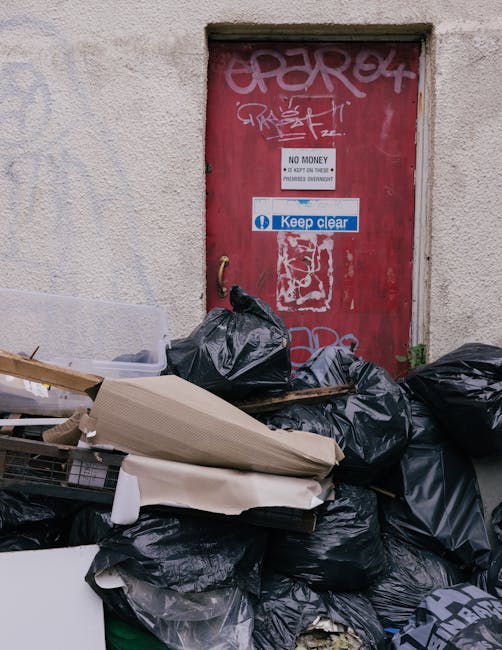
Avoid Hidden Rubbish Removal Fees in Neasden: What to Know
If you are trying to get rid of waste in Neasden, the last thing you want is a quote that looks fine at first and then grows arms and legs on the day. Hidden rubbish removal fees are usually where the frustration starts: a call-out charge nobody mentioned, a stair fee, a parking surcharge, or a "mixed waste" penalty that suddenly appears once the team arrives. This guide on avoid hidden rubbish removal fees in Neasden what to know breaks down what to watch for, how proper pricing should work, and how to compare options without getting caught out.
Truth be told, most people do not mind paying a fair price. The problem is surprise pricing. And that is where careful questions, clear photos, and a written quote can save you both money and hassle. Let's get into the details properly, because a few minutes of checking now can spare you a very annoying afternoon later.
Why Avoid hidden rubbish removal fees in Neasden what to know Matters
In a busy part of North West London like Neasden, waste removal often happens fast. A flat gets cleared between tenancies, a garage fills up before a refurb, or a builder wants a site swept clean before the weekend. That speed is useful, but it can also be where pricing gets fuzzy.
Hidden fees matter because rubbish removal is rarely just about taking things away. A provider may need to factor in labour, loading time, vehicle size, access, waste type, disposal charges, and recycling costs. If any of those are unclear before booking, you can end up paying more than expected. Not ideal. Not even close.
For households, the risk is usually an inconvenient bill. For landlords, tradespeople, and businesses, the bigger issue is budget control. One extra charge can throw off a whole job. If you are arranging a flat clearance, house clearance, or office clearance, the difference between a clean quote and an unclear one can be significant. That is why many people now look for clearer services like pricing and quotes explained in plain English before they book.
There is also a trust issue. If a company is vague about costs, you naturally start wondering what else may be vague. Waste removal should feel straightforward. If it doesn't, take that as a signal.
How Avoid hidden rubbish removal fees in Neasden what to know Works
Transparent rubbish removal pricing usually starts with one of three methods: an estimate from photos, an on-site quote, or a fixed price based on load size and waste type. The better the information you give, the less room there is for surprises later.
Here is the basic flow. You describe the waste, provide images if asked, and explain access details such as stairs, parking, long carries, or restricted entry. The company then calculates labour time, disposal route, and any special handling requirements. If the job is straightforward, the quote should stay close to the final price. If it is more complex, the quote should clearly say why.
That sounds simple, but hidden fees often come from the bits people forget to mention. A fridge at the back of a shed. Bags piled in a basement. Builders' rubble mixed with timber and plasterboard. A mattress wedged into a top-floor flat with no lift. None of that is unusual, but each detail can affect cost.
For example, a customer may ask for a quick collection of furniture and black bags. Then the team arrives and finds a broken sofa, an old appliance, and a narrow staircase. The job is still doable, but it is no longer the same job. The price may change if the original details were incomplete. Fair enough, really.
To avoid that, good providers will usually ask for honest, specific information up front. That is one reason services such as waste removal are easier to manage when you know exactly what needs collecting and where it is located.
Key Benefits and Practical Advantages
The biggest benefit of avoiding hidden fees is obvious: you keep control of the budget. But there are other advantages too, and they are worth saying out loud.
- Cleaner comparisons: You can judge one quote against another properly, instead of comparing a fake low price with a more honest one.
- Less stress on the day: No awkward conversation about extra charges when the team is already outside your property.
- Better planning: Landlords, business owners, and contractors can keep their job costs predictable.
- Faster service: Clear information often means quicker booking and smoother collections.
- More suitable service choice: You may realise you need a specific clearance type, such as builders waste clearance or garage clearance, instead of a generic collection.
There is a quieter benefit too: peace of mind. When the price is explained properly, the whole experience feels less like a gamble and more like a service. That matters, especially if you are clearing a home during a stressful move, bereavement, or renovation. The waste itself is not the hardest part; it is the uncertainty around it.
A transparent provider should also make it easier to understand related issues like payment methods and security. If that is important to you, it is worth reading about payment and security before you confirm anything.
Who This Is For and When It Makes Sense
This advice is useful for almost anyone arranging rubbish removal in Neasden, but a few groups will feel the benefit most strongly.
Homeowners and tenants need it when clearing out old furniture, white goods, loft clutter, or household rubbish. A single misleading quote can turn a tidy declutter into an awkward expense.
Landlords and letting agents often need fast turnaround. If a flat is being prepared for new tenants, delays and extra charges are inconvenient at best and costly at worst. Transparent pricing helps keep void periods under control. If that sounds familiar, flat clearance support may be the more suitable route.
Tradespeople and builders need certainty because waste costs are part of the job margin. If you are dealing with plasterboard, timber, packaging, or mixed site waste, ask about weight, load type, and access before booking a collection.
Businesses should pay particular attention. Office moves, stock clearances, confidential material disposal, and routine commercial waste can all carry separate handling requirements. A vague quote for a commercial job is rarely a good sign. If you are dealing with routine operations, business waste removal may be a better fit than a one-off ad hoc collection.
Anyone handling bulky or specialist items should slow down and ask questions. Mattresses, fridges, sofas, and hazardous materials can each trigger specific handling costs or restrictions. That is not hidden fees territory if the provider tells you clearly. It becomes a problem only when it is left to the last minute.
Step-by-Step Guidance
If you want to avoid hidden rubbish removal charges, use a process. A simple one. Nothing fancy.
- List everything that needs removing. Be exact. Count bags, note bulky items, and mention anything awkward like stairs or a narrow hallway.
- Separate standard waste from specialist items. Appliances, mattresses, and anything potentially hazardous should be identified early.
- Take clear photos. Wide shots help more than close-ups. The team needs to see the overall volume and how easy or hard it will be to load.
- Ask what the quote includes. Labour, loading, disposal, recycling, congestion or parking issues, and VAT if applicable should all be clear.
- Ask what could change the price. This is the key question. If access is worse than described, or the waste type changes, what happens?
- Get the quote in writing. Email, message, or booking confirmation is better than memory. Memory is slippery. It always has been.
- Confirm arrival and collection details. Check timing, payment method, and whether someone needs to be present.
- Keep the site as described. If more waste appears after booking, tell the provider before collection day rather than hoping nobody notices.
A small extra step can save a lot of trouble: measure awkward items. A sofa that looks manageable from the doorway can be a different story once you try to turn it around a stairwell. That is why people sometimes choose specific furniture services such as furniture clearance or mattress and sofa disposal rather than a generic load.
If you have builders' waste, do not assume it will be priced like household rubbish. Heavy rubble or mixed construction waste is usually assessed differently, which is why reading the details on builders waste clearance can help you ask the right questions before booking.
Expert Tips for Better Results
After dealing with enough waste jobs, a pattern becomes obvious: the clearest customers usually get the smoothest service. Not always, but often enough to matter.
Tip one: describe the waste by category, not just by emotion. "A lot of stuff in the spare room" is less useful than "6 black bags, one wardrobe, one small desk, and two boxes of books." The second version helps the provider price more accurately.
Tip two: mention access limitations in plain language. If the waste is on the third floor, if parking is tight, or if the collection has to happen through a rear alley, say so. Those details are not trivial.
Tip three: ask whether recycling or reuse affects the price. Some items may be easier to separate for recovery than others. A responsible provider will usually be happy to explain this, and you can also check their approach to recycling and sustainability if that matters to you.
Tip four: if you are clearing sensitive material, ask about confidentiality and secure handling. That is especially useful for offices, clinics, or home businesses. A service such as confidential shredding can be relevant when paper waste is part of the job.
Tip five: trust the feeling you get from the quote stage. If the answers are short, evasive, or oddly vague, do not brush it off. You are not being difficult by asking direct questions. You are being sensible. Little difference, big outcome.
Common Mistakes to Avoid
Most hidden fees are not truly hidden. They are usually just not discussed. That means the best defence is avoiding predictable mistakes.
- Booking on price alone: The cheapest headline price is often missing something important.
- Understating volume: "A few items" can turn into a full van load very quickly.
- Forgetting bulky extras: Old appliances, broken furniture, and mattresses are often treated differently.
- Ignoring access: A long carry or lots of stairs can change the job significantly.
- Not checking disposal terms: Some materials have special handling needs, especially hazardous items.
- Assuming VAT is included: Always ask if the quoted amount is inclusive or exclusive.
- Leaving waste outside the property without agreement: It may look easy, but it can create permission and safety issues.
One small but common one: people forget that a room can contain more waste than they realised. You look in the loft, see a few boxes, and think "fine." Then the boxes are opened, furniture appears, and the job grows. It happens. Quite a lot, actually.
If the clear-out is attached to a bigger home move or refurbishment, consider whether a full property service is more suitable. In many cases, home clearance or house clearance offers a clearer scope than trying to piece together multiple small jobs.
Tools, Resources and Recommendations
You do not need complicated tools to avoid rubbish removal fees. A phone camera and a notebook will do a lot of the heavy lifting.
- Photos or video: Take a quick sweep of the room, yard, garage, or loft so the provider can see context.
- Item list: Write down each bulky item and estimate the number of bags or boxes.
- Access notes: Record floor level, parking situation, lift access, and gate widths if relevant.
- Questions checklist: Keep a short list of pricing questions ready before you call or book.
- Quote record: Save the written quote and any follow-up messages.
It also helps to understand the type of job you actually have. A garage clear-out is not the same as a furniture disposal job. A loft with loose insulation, old suitcases, and a broken bed frame needs more care than a few bin bags. If you are unsure, services like loft clearance, garage clearance, or furniture disposal may be closer to your actual needs.
For unusual items, check specialist pages before you assume they will be handled under a standard collection. Fridges, washing machines, and similar items often need their own process, which is why fridge and appliance removal is worth reviewing in advance. Same story with garden waste, where soil, branches, and mixed green waste can be treated differently from domestic clutter. A quick look at garden clearance can help set expectations properly.
Law, Compliance, Standards, or Best Practice
Without turning this into a legal lecture, there are a few practical standards worth keeping in mind. In the UK, waste should be handled by a legitimate operator and disposed of responsibly. If something feels suspiciously cheap or oddly informal, be careful. Very careful.
For you as the customer, the best practice is simple: know what is being taken, understand how it will be priced, and keep a record of the agreement. That protects you if there is a dispute later. It also helps you separate a genuine added cost from a fee that was never explained.
Special waste deserves extra attention. Hazardous waste, electrical items, and materials that may pose health or safety risks should not be treated like ordinary household rubbish. If your job may involve anything awkward or potentially harmful, check the provider's hazardous waste disposal approach and their health and safety policy before you book.
Insurance is another sensible check. If people are carrying heavy items through your property, or removing waste from a shared building, you want confidence that the company has appropriate cover and sensible working practices. Their insurance and safety information should help you assess that.
And if you are reading terms and conditions, do it with a mug of tea and no rush. That is where many fee-related rules are usually explained. Not thrilling, I know, but useful.
Options, Methods, or Comparison Table
Different waste jobs call for different approaches. Here is a simple comparison to help you choose the right path.
| Method | Best for | Typical risk of hidden fees | What to check first |
|---|---|---|---|
| General rubbish removal | Mixed household waste, bagged items, everyday clear-outs | Medium | Load size, labour, access, VAT, disposal inclusion |
| Furniture clearance | Bulky items, sofas, wardrobes, tables | Medium to high | Stairs, dismantling, item count, lift access, mattress extras |
| Builders waste clearance | Renovation debris, rubble, timber, site waste | High | Weight, material type, mixed waste rules, loading effort |
| Office clearance | Workplace moves, desk and chair removal, paper waste | Medium | Confidential items, access windows, disposal segregation |
| Specialist appliance removal | Fridges, white goods, other difficult items | Medium to high | Electrical handling, weight, stair access, collection point |
If you are unsure which route fits, do not guess. A slightly more specific service is often cheaper than a generic service that has to correct assumptions on the day. Funny how that works, but it does.
Case Study or Real-World Example
A Neasden landlord needed a one-bedroom flat cleared between tenancies. At first glance, it sounded simple: a bed frame, a mattress, several bags of miscellaneous waste, and a broken chest of drawers. The first quote they received was very low, which is exactly what made them nervous. No details about stairs, disposal type, or what happened if the collection grew.
They paused, took photos, and wrote out a short item list. That revealed two important extras: the flat was on an upper floor with no lift, and there were also an old fridge and a few leftover DIY materials in the utility cupboard. The job had changed. Not dramatically, but enough to matter.
With those details clarified, the final quote was more realistic and, importantly, no one had to argue on the doorstep. The team arrived with the right tools, removed the waste in one visit, and the landlord could hand the flat over without delay. A very ordinary outcome, which is exactly what you want.
The lesson is plain: hidden fees are often avoided not by chasing the cheapest number, but by making the job visible before the team turns up. The clearer the information, the less room there is for nonsense.
Practical Checklist
Use this checklist before you book. It is short on purpose.
- Have I listed every item and every bag?
- Have I mentioned stairs, parking, lifts, gates, and narrow access?
- Have I separated ordinary waste from bulky or specialist items?
- Have I asked whether labour and disposal are included in the quote?
- Have I checked whether VAT is included?
- Have I asked what could change the price on the day?
- Have I saved the quote in writing?
- Have I checked whether the provider is suitable for my specific job type?
- Have I considered recycling, safety, and any special handling needs?
- Am I comfortable that the explanation feels clear and honest?
If you can tick most of those boxes, you are in a much better position to avoid surprise costs. And if you cannot, it may be worth asking a few more questions before you commit.
Get a free quote today and see how much you can save.
Conclusion
To avoid hidden rubbish removal fees in Neasden, the real trick is not complicated: be specific, ask the awkward questions early, and insist on a written breakdown. Most reliable providers will not mind that at all. In fact, they usually appreciate it because it helps them quote properly and get the job done without drama.
If you remember only one thing, let it be this: the cheapest quote is not always the cheapest job. A clear quote, a sensible scope, and honest access details usually save more money than chasing a bargain that looks too neat to be true. It probably is.
Whether you are clearing a home, a flat, an office, a garage, or a builder's load, a little care at the start makes the whole process calmer. That calm feeling, when the van leaves and the space is finally clear, is worth a fair bit on its own.
Frequently Asked Questions
What are hidden rubbish removal fees?
They are extra charges that were not made clear when the quote was given. Common examples include stair fees, access surcharges, disposal extras, or charges for items that were not mentioned in advance.
How can I avoid surprise charges when booking rubbish removal in Neasden?
Give a full item list, include photos, explain access issues, and ask what the quote covers. Always get the final agreement in writing so there is no confusion later.
Are quotes usually fixed or estimated?
It depends on the job. Some are fixed if the load is clear and access is straightforward. Others are estimates until the team sees the waste in person. The important part is knowing which one you have.
Do stairs or no lift usually cost extra?
They can, because they affect labour and time. If your waste is on an upper floor or in a hard-to-reach room, mention it early so the quote reflects the real job.
Why do bulky items sometimes cost more?
Bulky items can take longer to carry, may need two people, and may have specific disposal requirements. Sofas, mattresses, and appliances are common examples.
Should I send photos before getting a quote?
Yes, if the company asks for them or offers photo-based pricing. Clear photos help them judge volume and access, which usually leads to a more accurate quote.
Is the cheapest rubbish removal quote always a bad sign?
Not always, but it can be. If a price is much lower than expected, check what is excluded. Sometimes the low headline number leaves out labour, disposal, or other essentials.
What should be included in a rubbish removal quote?
At minimum, ask about labour, loading, disposal, access assumptions, VAT, and any special handling charges. A proper quote should explain exactly what you are paying for.
Do special items need separate pricing?
Often yes. Fridges, mattresses, sofas, electrical items, and hazardous materials may need different handling. That is normal, but it should be explained clearly before collection day.
Is rubbish removal the same as skip hire?
No. Skip hire leaves the container with you for a period of time, while rubbish removal involves a team loading and taking the waste away. Each works better in different situations. If you are comparing options, it can help to read about what can go in a skip as well.
What if I need to clear a whole property?
For full-house or flat clearances, it is usually better to be very precise about the number of rooms, bulky items, and access details. That makes a big difference to pricing and timing. Services such as house clearance and flat clearance are often more suitable than a vague one-off collection.
Can I check how a company handles complaints or payment before I book?
Yes, and you should if you want extra reassurance. A clear complaints route and simple payment information can tell you a lot about how the business works. It is worth reviewing the complaints procedure and payment and security before confirming anything.